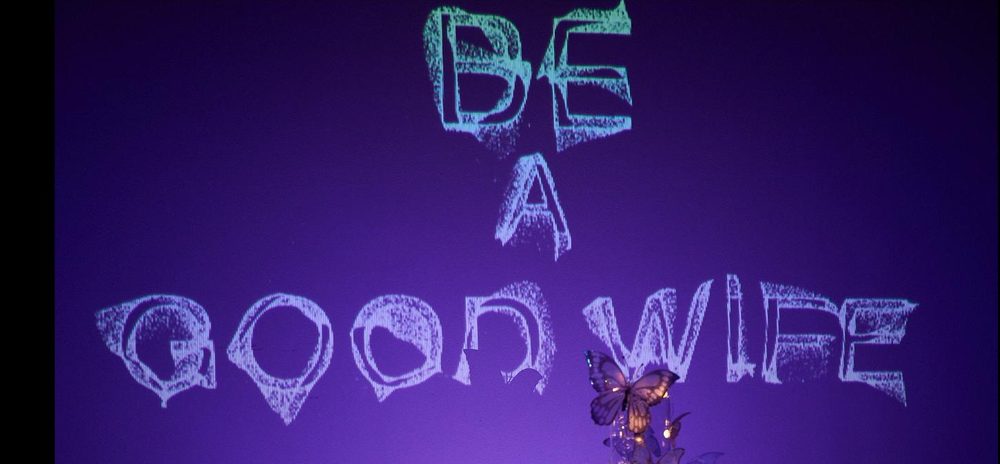
A phrase recently went viral on Chinese social media: “No marriage, no childbirth, eternal youth and beauty.” As birth rates fall across East Asia, feminism is often blamed by people who misunderstand it. Looking back at early feminist movements in the United States shows how an earlier generation met similar pressures. “Beauty,” a word that carries gendered bias, became the entry point for tracing how feminist ideas have shifted over the decades.
The research mapped each wave and its limits. The second wave pushed back on advertising’s ideal woman (object, wife and mother) but centered elite, white, middle-class women. The third wave’s post-feminism reframed beauty as self-choice, an idea largely absorbed by advertisers. The fourth wave brought more voices and more diverse bodies through social media, but also algorithmic narrowing, racialized stereotypes, Korea’s 4B movement and the backlash of an anti-feminist “womanosphere” that uses aesthetics and tradition to regulate women’s autonomy.
Behind the work are my own research notes tracing beauty labor in mass media from 1960 to now. Using Claudia Goldin’s generations of college-educated American women, they follow how each group chose between family and career as advertising changed around them: from ads where women appeared only in the kitchen and laundry room, to Photoshop-era body anxiety, Dove’s 2004 Campaign for Real Beauty, and today’s influencer feeds. The notes end with a question I could not avoid as a fashion and photography creator myself: when tutorials on looking slimmer or flawless get more views than anything else, does social media really give women a freer voice, or does the algorithm narrow what they see?
QuestionHow has “beauty” been defined and redefined across three waves of feminism, and why is feminism now blamed for East Asia’s falling marriage and birth rates?
MethodA feminist movement timeline from the 1960s to now; analysis of advertising, good-wife guides and anti-feminist media; marriage, birth and labor data (college-educated U.S. women 1900–2000, China 2000 and 2020); news on Korea’s 4B movement and Japan’s rising “lonely deaths.” Written research notes comparing U.S. media from 1963 to 2000 with U.S. and Chinese media after 2000, including the author’s own experience as a fashion and photography creator.
Key sources- Plato, on the sensible and intelligible worlds
- Patricia Bradley, Mass Media and the Shaping of American Feminism, 1963–1975
- Claudia Goldin, Career and Family
- Betty Friedan · Gloria Steinem · Toni Morrison
- Honor Freeman, Tupperware: Transforming a Chaotic Kitchen (2008)
- Dove, Campaign for Real Beauty (2004)
From research to formThe pillars hold the generations; the projection is Plato’s ideal realm, where beauty is negotiated rather than fixed. Early cocoon drafts were redesigned with felted wool in two shapes and materials, and resin with gold powder gives the 3D-printed butterflies depth.