The Perfect Mold

Year
2025
Medium
Three ceramic vessels (hand-built, coiled, wheel-thrown), gold, light sensors, projection mapping
Tools
Arduino · TouchDesigner (Kantan Mapper) · Blender

Three vessels. Three life stages. One impossible standard.

With the reform and rapid development of East Asian countries after the 1970s, meritocracy and pseudo-feminism shaped the values of many women born after the 1980s. Many of those who strive for perfection end up emotionally exhausted, living a life with no margin for error.

The work takes up the vase, a form often used to reduce women to beautiful, empty objects. Three sculptural vessels stand for youth, maturity and aging. When a visitor lifts a lid, a light sensor sets off a change inside: generative growth spreads across cracks that have been filled with gold, as in kintsugi. The inside turns out to be far richer than the surface suggested. The work asks what we might find if we chose to open something and look past its appearance.

Like ceramics, women are not fragile ornaments. They are vessels that can break, be repaired and become whole again.

Watch full documentation ↗
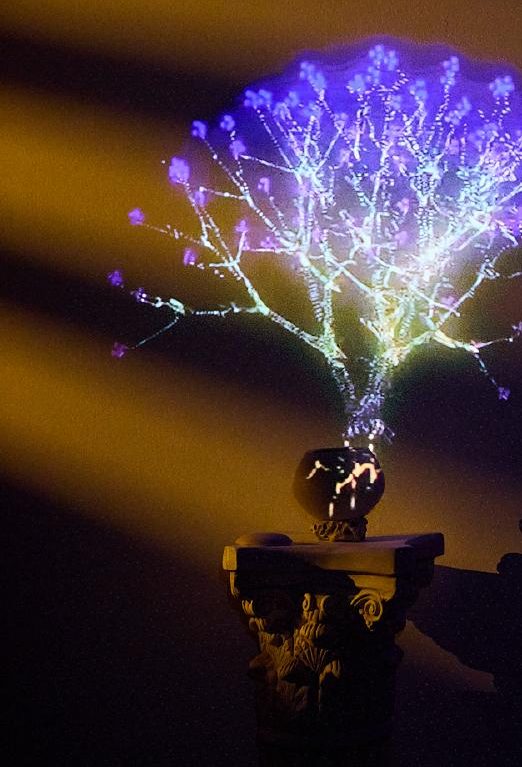
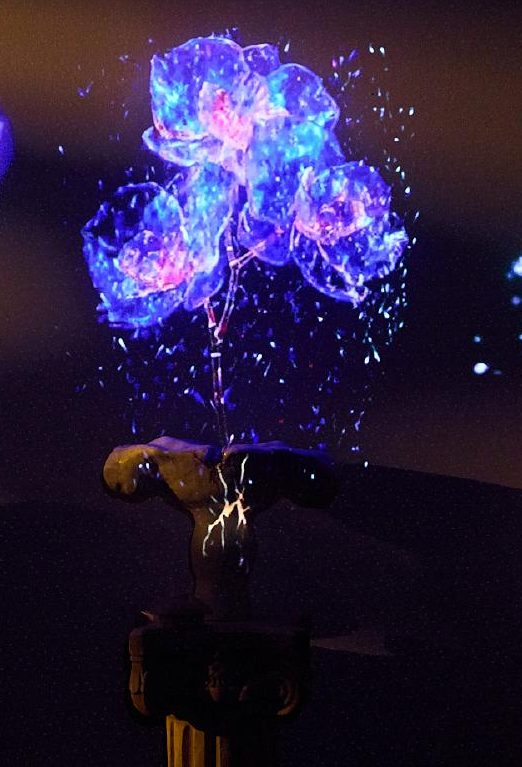
I · Youth
I · Youth
A soft, round sphere on a stone-like base: life emerging. White clay and a matte beige glaze stand for purity and cleanliness. The base is hand-built for an organic look; the sphere is wheel-thrown for a seamless surface.
II · Maturity
II · Maturity
A uterine form that both shelters and trains. Its cracks stand for the pressures before and after birth, including postpartum depression. Built by coiling and slab-building, with the cracks kept and filled with gold.
III · Aging
III · Aging
A pitcher, the role often given to East Asian grandmothers: a body made to pour. The ceramic chain around its waist is a visible script of duty, caring for grandchildren, running the household, living for others.

Research basis

The work began as a written proposal about the “perfect cage” of East Asian daughters. Shaped by meritocracy and by a pseudo-feminism that asks women to be independent while still following patriarchal rules, many women born in the 1980s and 1990s are taught to be independent, excellent and capable at everything. The goal is often not their own fulfillment but a “higher value” in marriage or social competition. Stories like “one exam decides your life” and “marry wrong and your life is ruined” build an identity that depends on outside approval, and a fear that a single failure is final.

Ceramics offered a different model. Every stage of making, from forming and drying to glazing and firing, can go wrong, and even a master cannot always prevent or explain a crack. Yet potters repair at every stage, and a finished piece rarely shows where it once cracked. Life, like ceramics, allows far more error and repair than these stories admit.

Question

Why do so many East Asian women who strive for perfection end up emotionally exhausted, and what would a life with room for error look like?

Method

Mental-health statistics on Asian and Asian American women; analysis of social, psychological and cultural conditions (Confucian merit culture, intergenerational survival anxiety, externally driven self-worth, conflicting gender ideals); Japan 2019–20 suicide, unemployment and housework data; a written proposal on meritocracy and pseudo-feminism.

Key sources
  • Rich Barlow, on parenting pressure and Asian American women’s suicide rates
  • Gao, Xie, Jia & Wang (2024), the burden of mental disorders in Asian countries
  • National Center for Health Statistics
  • Alfred Adler, on inferiority and overcompensation; Carl Jung, on the shadow self
  • Kintsugi · Tamara “Solem” Al-Issa · Hyegyung Kim
From research to form

Life is closer to making ceramics than to a one-shot game: cracks become gold, and growth only starts when the lid is lifted. Glazes were chosen for their uncertainty, Shino-style glazes and a self-made iridescent glaze whose colors depend on what happens in the kiln.

Research boards